
Frequency inverters (VFD)
Frequency inverters (VFD)
An asynchronous frequency converter is used to convert mains three-phase or single-phase alternating current with a frequency of 50 (60) Hz into three-phase or single-phase current with a frequency of 1 Hz to 800 Hz, some series offer up to 2000 Hz.
Electronic type frequency converters are often used to smoothly control the speed of an induction motor or a synchronous motor by creating a set frequency at the output of the voltage converter. In the simplest cases, frequency and voltage regulation is carried out in accordance with the specified characteristic V / f, in the most modern converters, the so-called vector control is applied, and already in the new ways of controlling the magnetic field with and without feedback (encoder).
An electronic-type frequency converter is a device consisting of a rectifier (DC bridge), which converts alternating current with an industrial frequency into direct current, and an inverter (converter), which converts direct current into alternating current with the required frequency and amplitude. Output thyristors (GTOs) or transistors (IGBTs) provide the necessary current to power the motor.
To improve the shape of the output voltage, a choke is often placed between the converter and the motor and an EMC filter is used to reduce electromagnetic interference and an RF filter for radio interference.
Therefore, Frequency inverters (VFD) are the optimal choice for solving a variety of tasks for controlling electric motors.
Showing all 8 results
How to choose a frequency inverter
The choice starts with the motor and the load, not only with the power on the nameplate. The inverter must cover the rated motor current with a margin, match the supply — single-phase 230 V or three-phase 400 V — and suit the type of load. Pumps and fans have a variable torque and save the most energy when their speed is reduced. Conveyors, extruders, mixers and hoists have a constant torque and need an overload capacity of at least 150 % for 60 s. With frequent stops and large inertia, check how the braking energy will be dissipated — with a built-in brake chopper and resistor or with a longer deceleration time.
Delta series in our range
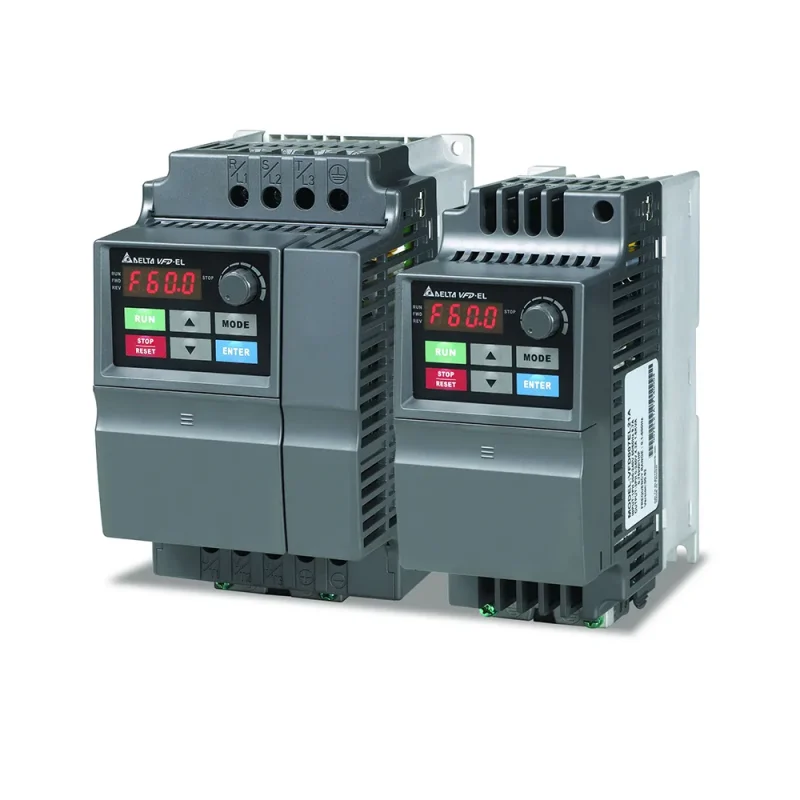
- VFD-EL — a compact inverter for simple tasks: single-phase 230 V from 0.2 to 2.2 kW and three-phase 460 V from 0.4 to 3.7 kW, built-in EMC filter on the single-phase 230 V and three-phase 460 V models, RS-485 (Modbus) and a PID controller.
- VFD-EL-W — the economical series for pumps, conveyors and edge banding machines: 0.2–2.2 kW at 230 V and 0.4–4 kW at 460 V, 150 % overload for 60 s, control of up to four pumps. It has no brake chopper and suits loads that do not regenerate energy.
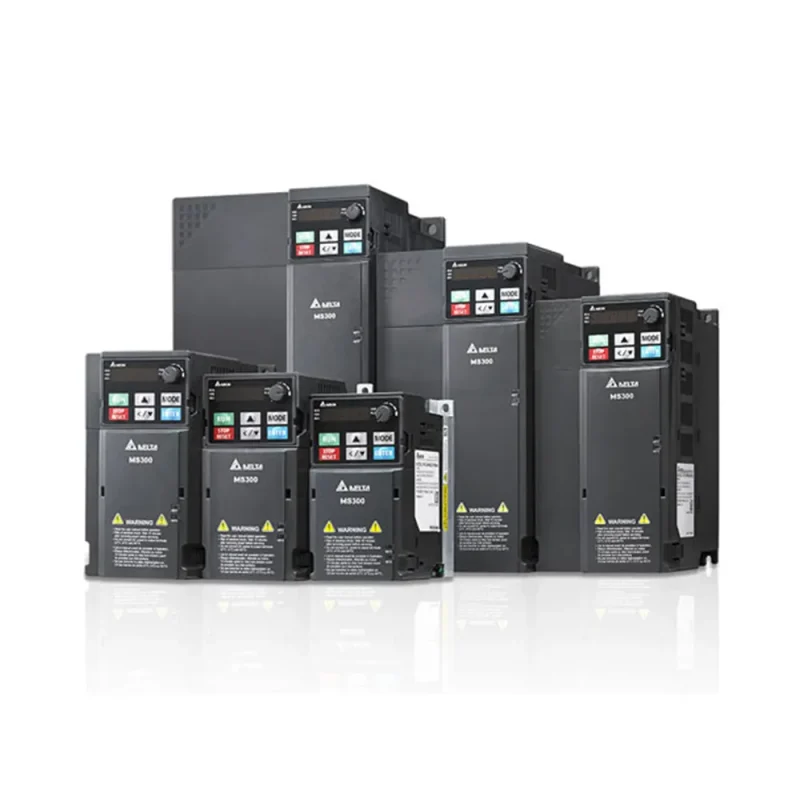
- MS300 — the standard compact vector drive for induction and permanent magnet motors: three-phase 460 V from 0.4 to 22 kW, built-in PLC, USB port, STO safety function and brake chopper; IP66 and high-speed versions are also available.
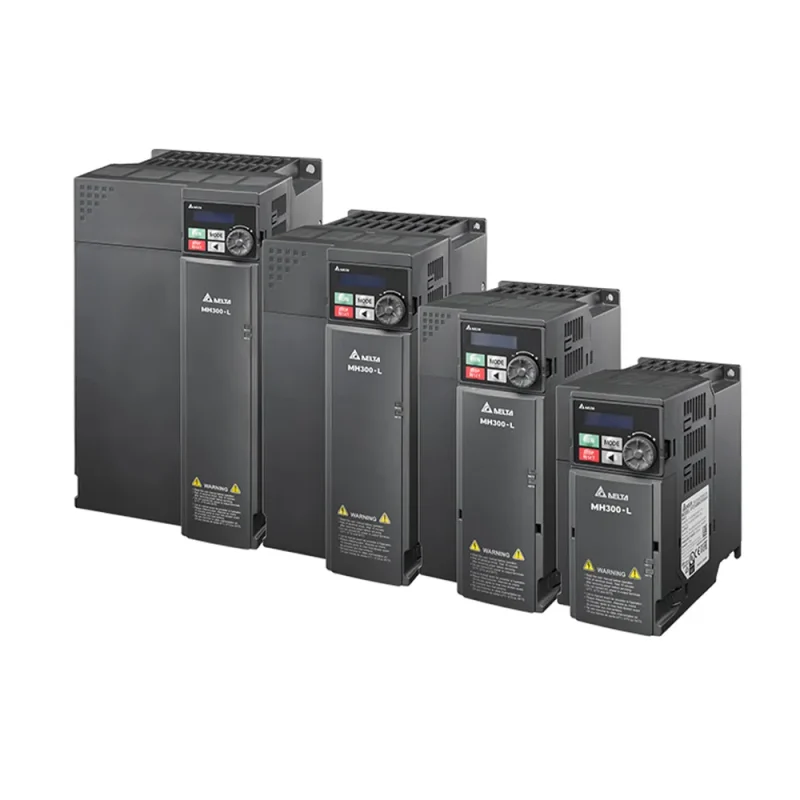
- MH300 — for heavier duty and for winding, slitting and printing machines: three-phase 460 V up to 75 kW, tension control and closed-loop operation with an encoder.
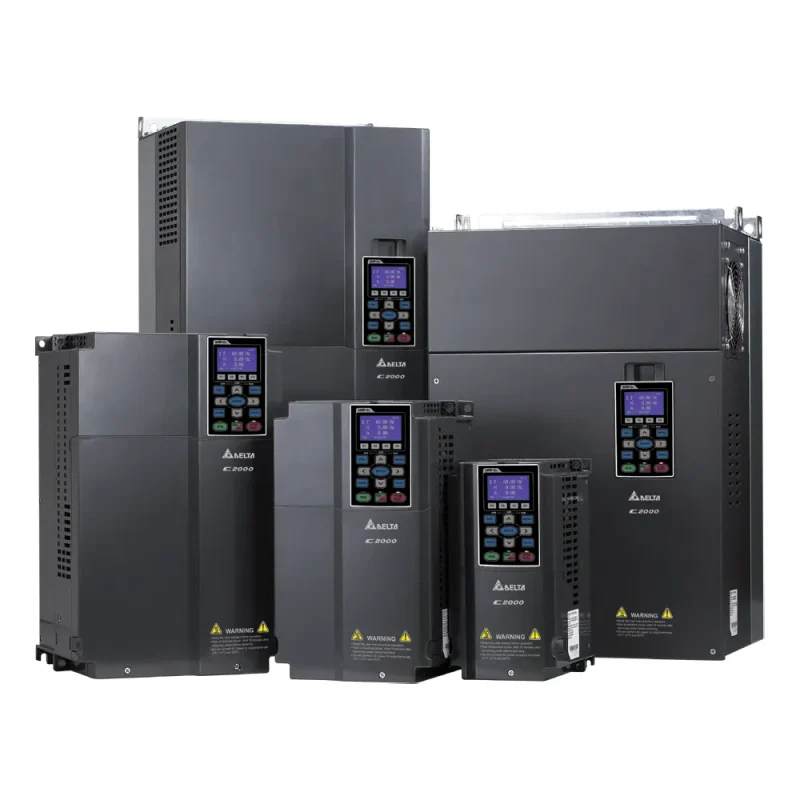
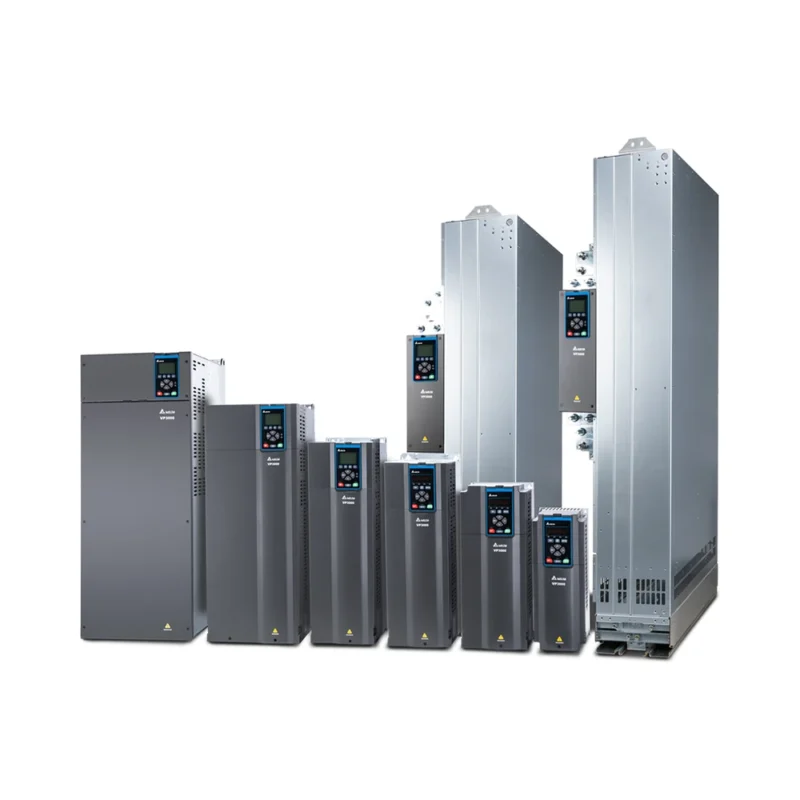
- VFD-C2000 Plus — vector control for heavy constant-torque applications: up to 560 kW at 460 V, overload 150 % for 60 s and 180 % for 3 s, built-in PLC and EtherCAT, PROFINET and EtherNet/IP communication cards.
Installation, protection and EMC
The inverter is protected by a circuit breaker or fuses as specified in the manufacturer's manual, and the motor is supplied through a shielded cable grounded at both ends. The EMC filter reduces interference towards the mains, and with a long motor cable an output choke protects the winding insulation. The drive can be controlled from push buttons and a potentiometer on the panel door, from a PLC via Modbus or over an industrial network.
Selection, programming and control panel from one supplier
MECHATRONICS LTD in Plovdiv, Bulgaria, selects the inverter from the motor and load data, completes it with filters, chokes and protection, sets the parameters and builds the electrical control panel. Send us the motor nameplate, the supply and the type of load through the Contacts page — we will propose the model and the wiring diagram.